

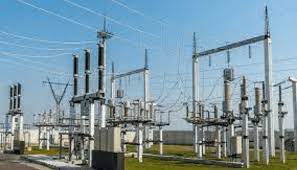
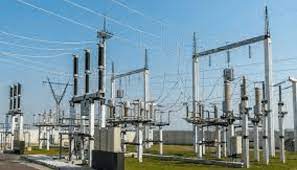
With its perennial electricity power challenges, experts say the unfolding partnership between the federal government and the sub-nationals will ultimately bring about the stable power supply that Nigerians have been yearning for; BENJAMIN UMUTEME writes.
For decades, Nigeria’s power sector operated under a highly centralised, single-buyer model that left millions of households and businesses in the dark.
Despite an installed generation capacity exceeding 14,000 megawatts (MW), the national grid frequently struggled to deliver more than 4,000MW to 5,000MW, choked by transmission bottlenecks, gas supply constraints, commercial illiquidity, and crippling infrastructure deficits.
However, a fundamental structural realignment is underway. By breaking the federal monopoly over electricity generation, transmission, and distribution, the country has set the stage for a decentralised and competitive sub-national market.
As the federal government and the states forge strategic partnerships, the nation is embarking on its most ambitious attempt yet-to-achieve grid stability and nationwide power availability.
The legal catalyst: the Electricity Act 2023 and sub-national empowerment
The foundation for this revolution was laid through the amendment of Section 14, Item 14 of the 1999 Constitution (as amended), followed by the signing of the Electricity Act 2023 by President Bola Ahmed Tinubu, along with its subsequent 2024 amendments.
The landmark legislation repealed the Electric Power Sector Reform Act (EPSRA) of 2005, effectively stripping the federal government of its exclusive jurisdiction over power generation, transmission, and distribution in areas covered by the national grid.
Under the new legal framework, states earn full authority to create state-level electricity markets, establish State Electricity Regulatory Commissions (SERCs), grant licenses to sub-national utilities, and regulate intra-state generation, distribution, and mini-grid operations; the Nigerian Electricity Regulatory Commission (NERC) transitions from a single national monolith into a coordinator of cross-border and inter-state power dynamics, systematically transferring regulatory oversight to states that demonstrate readiness.
Also, states can develop off-grid systems, captive generation, embedded generation, and independent transmission networks tailored to their specific industrial and demographic needs.
Already, over 16 states, including Lagos, Enugu, Ondo, Edo, Ekiti, Kaduna, Oyo, and Akwa Ibom, have enacted state electricity laws and established independent regulatory commissions to manage their intra-state electricity markets.
Key market-drivers
Several economic, regulatory, and technical forces are driving the rapid evolution of the country’s power sector.
These include: Tariff realignment and band A categorisation: NERC’s transition toward cost-reflective tariffs, most notably through the Band A tariff disaggregation has improved liquidity for Distribution Companies (DisCos), allowing them to recover costs on high-feed lines promising 20+ hours of daily supply; de-risking investments via local IPPs: State governments are establishing targeted Independent Power Plants (IPPs) and embedded generation projects, using localised off-take agreements to power industrial clusters without reliance on the fragile national grid; decentralised Renewable Energy (DRE) & Mini-Grids: Backed by agencies like the Rural Electrification Agency (REA), solar hybrid mini-grids and captive solar solutions are rapidly scaling to bridge rural energy poverty; and closing the metering gap.
With over 6.9 million metered customers nationwide and millions remaining on estimated billing, aggressive metering programs such as the Meter Asset Provider (MAP) framework and federal-state co-funded metering interventions serve as vital revenue protection mechanisms.
Market-players, stakeholder perspectives
Achieving a stable electricity supply requires alignment across every node of the value chain. Key sector players have voiced both optimism and critical warnings regarding market execution.
GenCos
Power generators continue to struggle with grid instability, gas payment arrears, and stranded capacity. To address these structural challenges, Dr. Joy Ogaji, the Chief Executive Officer of the Association of Power Generation Companies (APGC), noted that, “Nigeria’s thermal and hydro power plants are being forced to operate far below their base-load design due to transmission grid fragilities and load rejection.”
Continuing, Ogaji said, “When power plants cannot operate at base load, efficiency drops, operational costs triple, and equipment wear accelerates.
“The paradox of our electricity market is a failure to uphold commercial contracts. Liquidity collapses across the value chain when contractual payment obligations are not honored. For sub-national power markets to succeed, state governments and DisCos must ensure bankable power purchase agreements (PPAs), cost-reflective pricing, and strict settlement discipline.”
TCN and grid operators
As the sole manager of the high-voltage national grid, the Transmission Company of Nigeria (TCN) remains pivotal. While federal investments are expanding wheeling capacity toward 8,000 MW, frequent system disturbances underscore the need for automated Supervisory Control and Data Acquisition (SCADA) systems, regional grid isolations, and state-level embedded generation to relieve grid stress.
DisCos and ANED
DisCos represent the commercial interface of the power sector. High Aggregate Technical, Commercial, and Collection (ATC&C) losses continue to hamper financial viability.
Representatives from the Association of NERC-Licensed Electricity Distributors (ANED) highlight that state involvement provides a breakthrough for asset protection and revenue collection.
“DisCos have long suffered from energy theft, meter tampering, non-payment of bills by public institutions, and right-of-way bottlenecks. State government partnership gives us localised law enforcement support, urban planning alignment, and joint capital investment in distribution transformers and injection substations,” ANED noted.
NERC and state commissions
The regulatory landscape is undergoing a structured handoff. The Nigerian Electricity Regulatory Commission (NERC) has stated that the regulatory transition was designed to prevent market fragmentation, ensuring that SERCs enforce grid codes, consumer protection standards, and technical safety equal to national benchmarks.
How FG-state partnerships will stabilise power supply
The synergy between federal oversight and sub-national ability offers a pragmatic roadmap to solving the country’s persistent power challenges.
Co-investing in distribution and embedded generation: State governments can deploy capital directly into distribution networks within their borders – funding injection substations, transformers, and dedicated feeders or co-invest with DisCos. By building embedded generation plants directly connected to local distribution networks, states can bypass national transmission bottlenecks entirely.
Accelerating Right-of-Way (RoW) and infrastructure security: Delays in acquiring Right-of-Way permissions and rampant infrastructure vandalism have historically crippled gas pipelines and power transmission towers. State governments are uniquely positioned to grant expedited RoW approvals for power infrastructure and deploy local security personnel to safeguard electrical assets.
Eliminating electricity theft, enforcement gaps: State judicial systems can establish specialised mobile courts to prosecute electricity theft, illegal bypasses, and meter tampering. Enforcing strict penalties at the grassroots level drastically reduces DisCos’ commercial losses, enhancing their financial liquidity to purchase more bulk power.
Powering industrial clusters, economic zones: Through joint ventures, states can develop ring-fenced industrial zones supplied by dedicated IPPs and state-regulated mini-grids. This guarantees 24/7 power for manufacturing hubs – such as those in Aba, Nnewi, Ikeja, and Kano -boosting economic productivity without straining the national grid.
The logic
For a sector defined for decades by centralised failure, the logic behind deepening FG-state collaboration is straightforward: electricity demand and supply conditions vary sharply from state to state, and a single national framework has struggled to serve Kano’s industrial clusters, Lagos’s dense urban grid and rural communities with equal effectiveness.
Experts argue that allowing states to tailor generation, distribution and, in some cases, transmission arrangements to local conditions while retaining a coordinated national policy framework offers a more realistic route to stability than a purely centralised model.
A former Minister of Power, Chief Adebayo Adelabu, while addressing a PwC power sector roundtable last year, urged the states to leverage their natural resource endowments, from hydro and bio-fuel potential to a pilot ten-megawatt wind farm in Katsina and coastal wind potential along the country’s nine littoral states. He stressed that there were “no excuses” for states not to explore locally appropriate generation options alongside conventional power.
He also noted that decentralisation, however, only works if federal and state regulators remain aligned rather than in competition; lessons underscored by the ongoing dispute between NERC and state regulators over the CapEx order.
Analysts within the sector have noted that continued collaborations between NISO, NERC, state regulators, DisCos and other market participants will be essential to maintaining grid stability as more states assume control of their markets.
The National Integrated Electricity Policy, described by officials as the first unified framework of its kind in over two decades, is intended to serve exactly that coordinating function, strengthening cooperation between the federal and state governments as more states come on board.
With the Minister of Power, Joseph Tegbe, now settling into office and a resolution mechanism in place for the current regulatory dispute, the coming months will test whether the Electricity Act’s promise of a genuinely collaborative federal-state power market can translate into the steady and affordable electricity supply that Nigerians have awaited for, for decades.