
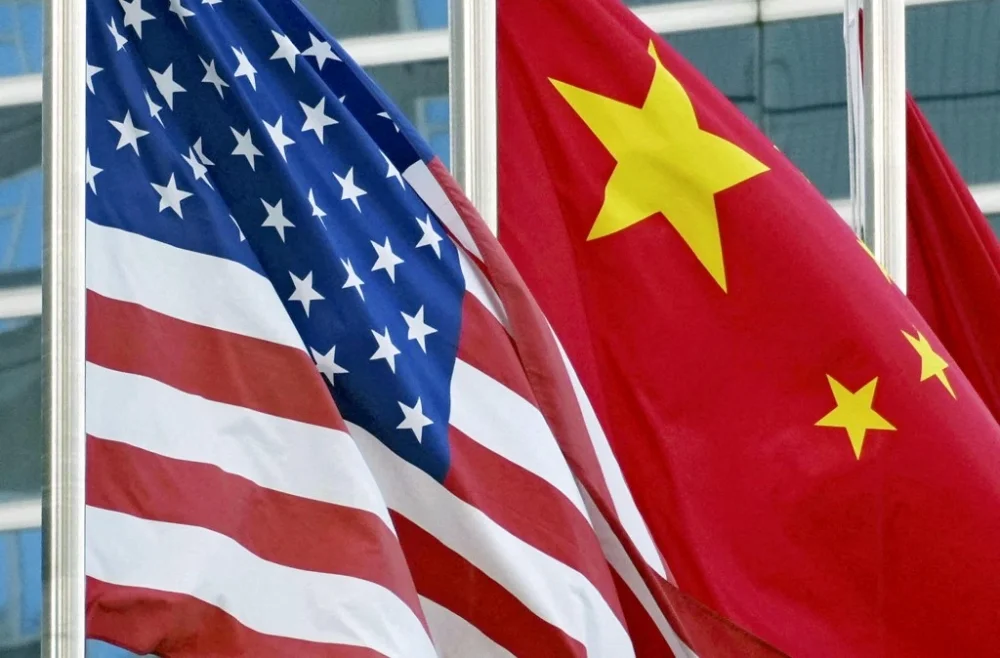
China has strongly criticised the latest tariffs imposed by the United States on Chinese exports and goods from 59 other countries, warning that the measures could reignite a damaging trade war and undermine global economic stability.
Key Highlights:
- China condemns new US tariffs of up to 12.5% on imports from 60 countries.
- Beijing warns that a renewed trade war serves no country’s interests.
- The US says the tariffs target imports linked to forced labour concerns.
- China vows to oppose unilateral tariff measures.
- The latest action threatens to strain improving US-China trade relations.
Speaking at a regular press briefing on Friday, Chinese Foreign Ministry spokesperson Lin Jian rejected the new tariff regime, describing it as a unilateral action that violates the principles of free and fair international trade.
“We oppose all forms of unilateral tariff measures,” Lin said.
He cautioned that tariff disputes would only deepen global economic uncertainty.
“Tariff wars and trade wars are not in the interests of any party,” he added.
The fresh tariffs, announced by the Office of the United States Trade Representative (USTR), range between 10 per cent and 12.5 per cent, with China receiving the highest tariff rate.
Read Also:
The new duties replace temporary global tariffs introduced earlier this year after the US Supreme Court struck down several reciprocal tariffs imposed by President Donald Trump under emergency powers.
Explaining the decision, US Trade Representative Jamieson Greer said Washington was strengthening enforcement of its ban on imports produced through forced labour.
According to Greer, countries with established forced labour import prohibitions, including Canada, the European Union and the United Kingdom, qualified for the lower 10 per cent tariff, while countries such as China, India and Japan were subjected to the higher 12.5 per cent rate.
The latest development threatens to reverse progress made in easing tensions between the world’s two largest economies.
After years of escalating tariffs and retaliatory measures, the United States and China reached a temporary truce following a meeting between President Donald Trump and Chinese President Xi Jinping last October.
Subsequent diplomatic engagements, including Trump’s visit to Beijing earlier this year, had raised hopes of broader tariff reductions and improved bilateral trade relations.
However, the newly announced tariffs have renewed concerns that another prolonged trade war could disrupt global supply chains, increase production costs and weigh on international economic growth.