
The Federal Government has unveiled the Power Force Program, a major human capital initiative designed to bridge Nigeria’s critical workforce gap and accelerate the country’s nationwide smart metering rollout.
The program which is being implemented under the presidential metering initiative, targets training of 5,000 youths on smart meter installation.
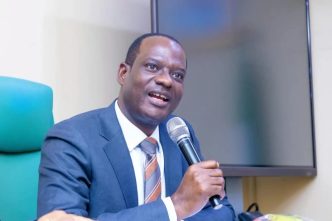
Speaking at the flag off of the program in Abuja on Thursday, Joseph Tegbe, minister of power, explained that liquidity deficit remains a primary hurdle confronting the sector, noting that every stage of the electricity value chain relies on timely, adequate revenue collection—a process he said has been long compromised by estimated billing and inadequate metering.
The minister decried that inadequate metering has denied the sector the financial certainty required to sustain investment, improve service delivery and expand electricity access.
He said that where electricity consumed cannot be accurately measured, revenue cannot be accurately collected, he also added that where revenue is uncertain, investments decline, infrastructure deteriorates, and ultimately, consumers suffer.
“The metering gap, therefore, is not just a technical problem; it is one of the principal causes of the liquidity challenges that have constrained the growth of our power sector.
“The dearth of skilled workforce has long been identified as a showstopper to government’s drive to closing the metering gap. This is precisely why the Power Force Programme is a significant step. We are deliberately building the skilled workforce required to install these meters efficiently, professionally and at scale.
“Meters do not install themselves, behind every successful metering programme must stand thousands of competent, certified and dedicated technicians. The 5,000 young Nigerians being trained under this initiative will become the backbone of Nigeria’s smart metering workforce ,” he said.
Tegbe noted that since assuming office, President Tinubu has pursued bold and audacious reforms designed to restore financial sustainability across the electricity market while ensuring that fairness, transparency and accountability remain at the heart of the system.
He said that president Tinubu’s guiding principle is both simple and just: every Nigerian deserves to pay only for the actual electricity consumed, and every service provider deserves to be paid for the electricity genuinely supplied.
Metering, he said has a multiplier effect across the value chain as it removes disputes, replaces estimation with accuracy, uncertainty with confidence, and suspicion with trust.
“It empowers consumers to manage their electricity usage whilst providing DisCos with reliable revenue streams to improve service delivery. In doing so, it strengthens the entire Nigerian Electricity Supply Industry.
“This is why the Federal Government has continued to prioritise interventions aimed at restoring liquidity and consumer confidence across the market. Through ongoing reforms, improved market discipline, settlement initiatives and targeted financial interventions, we are addressing legacy challenges whilst laying the foundations for a commercially viable electricity industry capable of attracting sustained private investment.
Tegbe also commended the recent withdrawal of the court action instituted by the Association of Meter Asset Providers of Nigeria (AMMON), stating that the decision has removed a significant obstacle to the accelerated deployment of electricity meters across the country.
“I wish to sincerely commend AMMON for embracing dialogue in the national interest. I equally appreciate the Presidential Metering Initiative, the Nigerian Electricity Regulatory Commission, Bureau of Public Enterprises (BPE), Meter Asset Providers and every stakeholder whose constructive engagement made this breakthrough possible.
“Today, I wish to assure every electricity consumer across our nation that this administration remains unwavering in its commitment to closing Nigeria’s metering gap.
“They will help ensure that millions of households and businesses receive professionally installed meters that meet the highest technical and safety standards. Beyond strengthening the power sector, this programme creates meaningful employment, equips our young people with future-ready technical skills, supports local content development and stimulates economic growth.
“It demonstrates that our electricity reforms are not merely about equipment and technology; they are equally about creating opportunities, building human capital and securing livelihoods,” the minister added.
In his address, Abdulrahman Abdulrazaq, Governor of Kwara State and Chairman of the Nigeria Governors’ Forum (NGF), said that the PMI is not just about fixing the finances of the power sector through metering but impacting the lives of young Nigerians, through training and skills development.
Abdulrazaq who was represented at the event by Edmund Obiora Nnaji, Executive Director, Finance and Administration at the NGF, called on fellow governors to explore supporting this Power Force initiative with a view to expanding the pool beyond the initial five thousand trainees being targeted.
Also speaking at the event, Olu Verheijen, Special Adviser to the President on Energy, described the PMI as the largest metering programme in the history of Nigeria, established under the leadership of President Bola Ahmed Tinubu to solve one of the biggest barriers to a reliable electricity sector: ensuring that every Nigerian pays only for the electricity they actually use.
She added, “One young installer cannot transform Nigeria. But five thousand can inspire fifty thousand. And fifty thousand can inspire millions more. That is how movements begin. One opportunity. One person. One act of service at a time.”
Following the Abuja launch, the Power Force training will expand to various centres across Nigeria’s six geopolitical zones. Upon completion, trainees will receive formal certification by NEMSA as qualified meter installers who have met national and international competence and safety standards.
Read Next
AFRICA FINANCE IN BRIEF: Africa’s biggest economies unite on rates
Get Newsletter Updates
Enjoying our column?
Subscribe to our specialised **Renewable Energy** feed to receive fresh reports and analyses directly in your inbox.