
India’s Education Minister, Dharmendra Pradhan, has resigned following widespread youth-led protests over repeated irregularities in major examinations that are considered crucial for students’ academic and career prospects.
Pradhan announced his resignation on Saturday through a statement shared on social media platform X, confirming that he had submitted his resignation letter to the prime minister.
The protests were driven by the Cockroach Janta Party (CJP), a youth-focused movement that gained momentum on social media.
Demonstrators expressed outrage over repeated exam paper leaks and other alleged flaws in the examination process.
The CJP has called for sweeping reforms to India’s education system, insisting that measures be introduced to restore transparency, accountability, and public confidence in the country’s examination process.
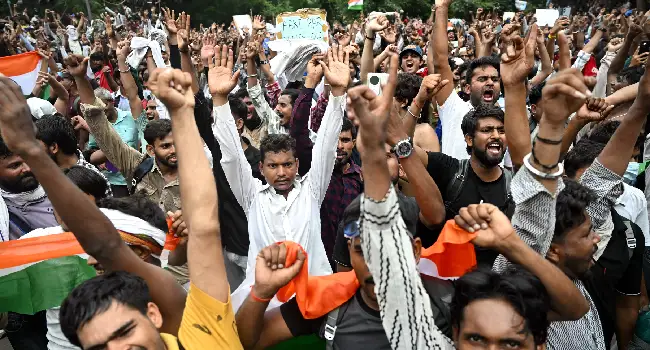
Demonstrations at the Jantar Mantar protest site in the centre of New Delhi intensified during the week and began spreading to other parts of the country.
Police fired tear gas and charged with batons at protesters as they tried to march to parliament this week.
The government held two rounds of talks with CJP leaders on Monday and Friday, but little headway was made, with the youth-led movement sticking to their demands ahead of another proposed meeting on Saturday.
Pradhan announced his resignation before that much-anticipated third round of talks.
“I am pained to see the events of the past 10 days. This is not a matter of personal prestige for me,” he said in his letter in Hindi.
“India’s youth power is the real strength of this nation. My resolve is that we will not let the country’s youth get trapped in a vicious cycle of confusion.”
Protesters erupted in joy after Pradhan’s announcement.
“We have done it,” CJP founder Abhijeet Dipke said to a thunderous response by hundreds of protesters.
The movement has evolved to include concerns over unemployment, opportunities for young people and what critics brand as Prime Minister Narendra Modi’s increasingly authoritarian style of governance.
The protests became one of the biggest challenges to Hindu nationalist Modi’s administration since his 2024 re-election.
The protesters’ other demands include compensation for those affected by examination irregularities and for legal cases against protesters to be dropped, according to CJP spokesman Ashutosh Ranka.