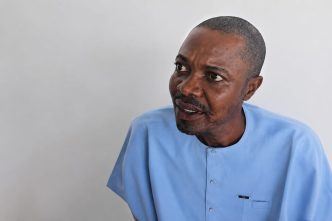

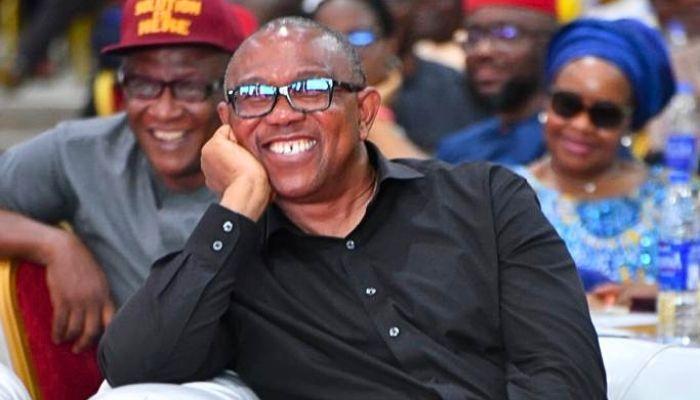
Peter Obi, presidential candidate of the Nigeria Democratic Congress (NDC), has outlined an economic blueprint centred on agriculture, manufacturing, small businesses and improved electricity supply, arguing that Nigeria must shift from a consumption-driven economy to a production-led one to create jobs, reduce poverty and boost exports. This is coming ahead of the 2027 elections, which is less than five months away.
Speaking during an exclusive interview on Sunday Politics on Channels Television, Obi said Nigeria’s economic challenges stem from decades of underinvestment in productive sectors, insisting that the country’s vast agricultural resources and entrepreneurial potential remain largely untapped.
“The only way to pull Nigeria out of poverty, or even genuinely grow GDP, is through production, not consumption. That production starts with agriculture, which gives you the food you need, raw materials for your factories, and jobs. That’s a win-win,” he said.
The former Anambra State governor said Nigeria could not only feed itself but also earn more from agriculture than crude oil if the sector received the right investments.
“This country can produce enough of what we can eat, and we can actually make more money from agriculture than we make from oil because, as it is today, we have vast uncultivated land,” Obi said.
He blamed years of dependence on food imports for weakening domestic agricultural production, citing rice as an example.
Obi compared Nigeria with Bangladesh, noting that despite having a much smaller land mass, the Asian country now produces between 15 million and 16 million tonnes of unmilled rice annually.
“Bangladesh today produces about 15 to 16 million tonnes of unmilled rice… they are now the third or fourth largest producer globally,” he said, arguing that Nigeria should be producing significantly more given its larger expanse of arable land.
According to Obi, restoring security would be critical to unlocking Nigeria’s agricultural potential, particularly in states with vast cultivable land that have become inaccessible because of insecurity.
“Niger State today is virtually occupied by terrorists, yet it has vast, fertile, cultivable land. If you put resources behind it, you can turn it around,” he said.
He also pointed to Sambisa Forest as an area whose economic potential had been overshadowed by insecurity.
“Sambisa is about 60,000 square kilometres, twice the size of Belgium… Belgium feeds itself and exports food,” Obi said.
He identified Taraba State and the Mambilla Plateau as suitable locations for cultivating tea and coffee for export.
Beyond agriculture, Obi said Nigeria must strengthen manufacturing to create value from local raw materials rather than exporting them in their primary form.
“From there you move into manufacturing,” he said. “To build a strong economy, you need a strong manufacturing base, and you must export.”
The NDC presidential candidate also pledged stronger support for small and medium-sized enterprises, saying government should focus on creating an enabling environment rather than becoming a producer.
“I never said government would produce. We will encourage the private sector, entrepreneurship, and small businesses,” Obi said.
Drawing comparisons with Indonesia and China, he argued that small businesses account for the majority of employment in successful economies because governments provide affordable financing, training and policy support.
“How can you run a small business with no government support, no training, and interest rates at 35 per cent? It’s impossible,” he said.
Asked whether he would prohibit food imports, Obi said restrictions would only come after Nigeria had built sufficient domestic production capacity.
“Not without first building up local production and employment,” he said.
He cited India and Vietnam as examples of countries that successfully transitioned from food importers to major rice producers through sustained investment in local agriculture.
Obi acknowledged that transforming the economy would require time but said early progress would inspire confidence among Nigerians.
On electricity, Obi ruled out making what he described as unrealistic promises of uninterrupted power within a single four-year term.
“I will not tell them I’m going to give them reliable, stable, 24-hour electricity within four years,” he said. “It is impossible because if you want to build a power plant, it will take you about four years to build a power plant.
Instead, he pledged to improve Nigeria’s electricity value chain by ensuring the country can consistently generate, transmit and distribute at least 10,000 megawatts of power.
“We will be able to generate more than 10,000 megawatts. We are doing that today; we are generating more than 10,000, but we are not able to transmit that,” he said. “I said we will be able to generate more than 10,000, transmit and distribute that.”
Obi also proposed expanding embedded power projects across industrial clusters by replicating decentralised electricity models such as Geometric Power in Aba, arguing that improved electricity supply would boost manufacturing, support businesses and accelerate economic growth.
He maintained that a combination of secure farmlands, a stronger manufacturing base, affordable financing for businesses and more reliable electricity would put Nigeria on a path to sustainable growth, higher exports and lower unemployment.