
President Bola Ahmed Tinubu Thursday unveiled a $3.05 billion package of social investment and human capital development programmes designed to accelerate poverty reduction, strengthen community resilience, improve education and healthcare and support internally displaced persons across the country.
The programmes, comprising the $1.25 billion Nigeria Community Action for Resilience and Economic Stimulus Additional Financing (NG-CARES AF), the $300 million Solutions for Internally Displaced and Host Communities (SOLID) initiative, and the $1.5 billion Human Capital Opportunities for Prosperity and Equity (HOPE) programme, form a central pillar of the administration’s Renewed Hope Development Plan (2026–2030).
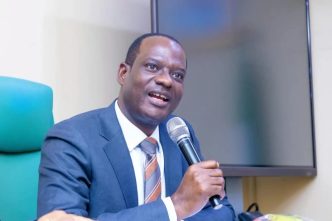
President Tinubu, whose keynote address was delivered on his behalf by the Minister of Finance and Coordinating Minister of the Economy, Taiwo Oyedele, at the Banquet Hall of the State House, Abuja, described the programmes as a practical demonstration of his administration’s commitment to translating economic reforms into tangible improvements in the lives of ordinary Nigerians.
He said the initiatives represented promises fulfilled under the Renewed Hope Agenda, stressing that government was determined to ensure that the benefits of ongoing economic reforms reached every community and household across the federation.
The President acknowledged that recent economic reforms had begun producing encouraging results, but maintained that national progress would only be meaningful when citizens experienced improvements in their daily lives.
According to him, while confidence in the economy continues to grow, the next phase of government policy is to ensure that economic stability delivers jobs, higher incomes, quality education, accessible healthcare and stronger communities.
He said the programmes would serve as major instruments for achieving Nigeria’s ambition of becoming a one-trillion-dollar economy by 2030 without leaving vulnerable citizens behind.
The President said that the Renewed Hope Development Plan provides the roadmap for economic diversification, human capital development and stronger sub-national institutions, while the newly launched initiatives would translate those policy objectives into measurable outcomes in communities nationwide.
He cited recent macroeconomic achievements as evidence that the country’s reform programme was yielding positive outcomes.
He said Nigeria recorded 11.2 per cent real Gross Domestic Product (GDP) growth, alongside nearly 10 per cent per capita income growth in dollar terms last year, adding that the economy remains on course to sustain similar performance this year.
He also disclosed that the nation’s foreign reserves had risen above $50 billion, while inflation had declined significantly from its 2024 peak.
The President said the improving economic indicators were laying a solid foundation for broader national development, insisting that the focus must now shift from macroeconomic recovery to improving the welfare of ordinary Nigerians.
The President revealed that the federal government had already extended expanded cash transfer interventions to 15 million vulnerable households, a development he said had lifted an estimated 7.5 million Nigerians out of poverty.
He explained that the newly launched programmes would consolidate those achievements by expanding support for poor families, farmers, small businesses, displaced communities and public institutions responsible for delivering essential services.
The president explained that the NG-CARES Additional Financing programme, valued at $1.25 billion and supported by the World Bank, would focus on boosting agricultural production, supporting smallholder farmers and strengthening micro, small and medium enterprises as part of efforts to stimulate economic activities at the grassroots.
He said the SOLID initiative, financed with $300 million from the World Bank, would bridge humanitarian assistance and long-term development by investing in infrastructure, livelihoods and essential services for internally displaced persons as well as communities accommodating them.
According to him, the programme seeks not only to rebuild destroyed infrastructure but also to restore hope and create sustainable opportunities for affected populations.
On the HOPE programme, valued at $1.5 billion, the President described it as the Federal Government’s flagship investment in Nigeria’s human capital.
He said the initiative would strengthen primary healthcare delivery, improve foundational learning in public schools, enhance support for teachers and deepen transparency and accountability in governance at the ward level through its three components — HOPE-GOV, HOPE-PHC and HOPE-EDU.
The President stressed that the three initiatives should not be viewed as isolated interventions but as components of a unified national strategy aimed at reducing poverty, strengthening resilience and expanding opportunities for citizens.
He explained that livelihoods, education, healthcare, social protection and support for displaced communities were interconnected and would be implemented through a coordinated, ward-focused approach designed to improve service delivery across all levels of government.
According to him, aligning federal, state and local governments around community-based implementation would ensure that every ward becomes a centre of development, opportunity and improved public service.
The president commended the Minister of Budget and Economic Planning, the Minister of Education and the Coordinating Minister of Health and Social Welfare for their roles in developing the programmes.
He also called on state governments, working through the National Economic Council, to ensure effective implementation of the initiatives, stressing that the success of NG-CARES, HOPE and SOLID would depend largely on cooperation among all tiers of government, development partners and implementing agencies.
He urged all stakeholders to seize what he described as a defining opportunity to build a nation where extreme poverty is drastically reduced, quality healthcare and education become accessible to all citizens, and communities are better equipped to withstand and recover from economic and social shocks.
The President expressed confidence that the initiatives would improve the lives of millions of Nigerians in every ward and every state, while advancing the broader objectives of the Renewed Hope Agenda.