
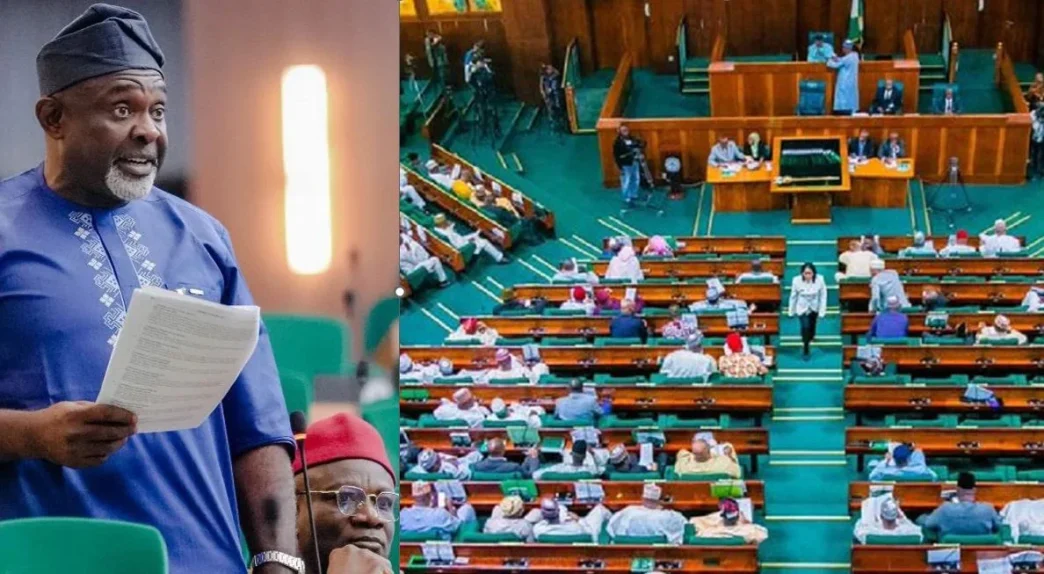
A member of Nigeria’s House of Representatives, Hon. Joshua Chinedu Obika, has raised alarm over what he described as a dangerous level of control within the National Assembly, alleging that the ruling All Progressives Congress (APC) determines which motions lawmakers are allowed to bring forward, particularly those that could affect the interests of the party or its leadership.
Obika, who represents the AMAC/Bwari Federal Constituency in the Federal Capital Territory, made the claims during an interview on the KAA Truths podcast, where he spoke about the internal workings of the House of Representatives and what he described as restrictions placed on lawmakers’ freedom to independently raise issues of national importance.
The lawmaker alleged that Nigeria is currently experiencing what he termed “state capture,” arguing that the legislature has lost a significant level of independence and has become heavily influenced by political interests.
According to Obika, members of the House are required to notify the Speaker of the National Assembly before moving motions, a process he said gives the leadership the ability to determine which issues receive attention on the floor.
“As a House member, before I could move a motion in the House, I had to write to the Speaker of the National Assembly,” Obika said.
He alleged that if the Speaker discovers that a proposed motion could conflict with the position or interests of the leadership, the lawmaker behind it may be prevented from presenting it.
“Even if you want to move such a motion, and the Speaker figures out that there is an intent for such and may want to go against what they stand for, he will sideline you,” he stated.
Obika further claimed that lawmakers do not have the freedom to speak during proceedings unless they are recognized by the Speaker, adding that members who challenge the position of the leadership risk being ignored during debates.
“You cannot stand up in the House and speak until the Speaker permits you to do so. That is the law. They blacklist you. If you put your hands up in front of the Speaker, he will overlook you and call somebody behind you,” he alleged.
The lawmaker claimed that motions considered sensitive or capable of exposing problems within government circles are often frustrated through procedural controls or disruptions on the floor. He alleged that issues that may negatively affect those in power are less likely to receive legislative attention.
Obika also accused the APC leadership of influencing the legislative agenda by determining which matters are allowed to progress, suggesting that motions that could challenge the party’s interests are unlikely to receive approval.
He said the current situation has weakened the ability of lawmakers to effectively perform their constitutional role of oversight, describing the 10th National Assembly as a shadow of what previous assemblies represented.
The lawmaker also pointed to the influence of senior officials in President Bola Tinubu’s administration who have previous legislative experience, including the Vice President and the Secretary to the Government of the Federation, arguing that they understand how to navigate and influence the workings of the National Assembly.
Obika described the current Assembly as a “9 and half,” implying that it lacks the independence and effectiveness expected of a fully functioning legislature.
His comments have added to ongoing national discussions about the relationship between Nigeria’s executive and legislative arms of government, with critics and observers continuing to debate whether the National Assembly is sufficiently independent to hold the government accountable.
The Speaker of the House of Representatives and the APC leadership have not publicly responded to Obika’s allegations at the time of this report.