
…as National Assembly backs diaspora voting
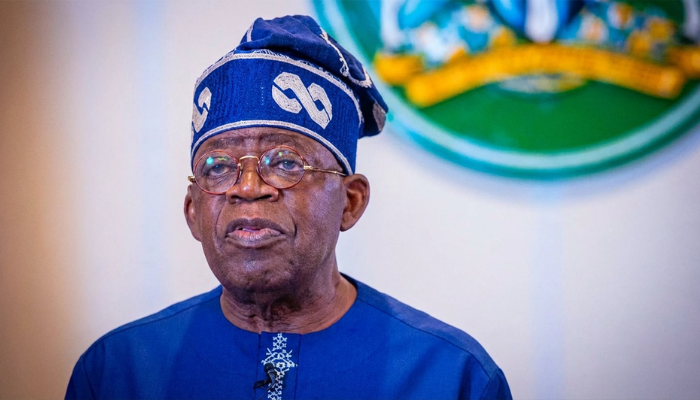
President Bola Tinubu on Friday unveiled plans to institutionalise a permanent national framework for engaging Nigerian medical professionals abroad, as the National Assembly pledged legislative backing for the Diaspora Health Impact Initiative (DHII) and renewed its commitment to diaspora voting.
The commitments were made at the 2026 National Diaspora Day celebration held at the Banquet Hall of the Presidential Villa, Abuja, where government officials, lawmakers, healthcare professionals and diaspora organisations agreed that Nigeria’s overseas medical workforce remains one of the country’s greatest assets in addressing persistent healthcare challenges.
The event, organised by the Nigerians in Diaspora Commission (NiDCOM), was themed “Harnessing Global Diaspora Medical Expertise to Strengthen Local Health Systems for National Development.”
In his address, President Tinubu called on Nigerian doctors, nurses, researchers, scientists and public health experts abroad to play a more active role in rebuilding the country’s healthcare system, assuring them that the Federal Government would create institutional mechanisms to harness their expertise, investments and innovation.
He described Nigerians in the diaspora as a source of national pride, saying they had distinguished themselves globally while maintaining strong ties with their homeland.
“Our diaspora is a source of national pride. Across the world, Nigerian doctors, nurses and public health leaders are saving lives, advancing science and shaping global healthcare,” the President said.
“Today, we celebrate not only your achievements abroad but also your enduring commitment to the homeland.”
Tinubu commended NiDCOM, led by its Chairman and Chief Executive Officer, Abike Dabiri-Erewa, for strengthening engagement between Nigeria and its citizens abroad and creating opportunities for them to contribute to national development.
He also praised the Diaspora Healthcare Impact Initiative (DHII), jointly coordinated by NiDCOM and the Federal Ministry of Health and Social Welfare, describing it as a major intervention that mobilises Nigerian healthcare professionals worldwide to support healthcare delivery in Nigeria.
The President acknowledged the contributions of professional bodies, including the Nigerian Medical Association (NMA), the Medical Association of Nigerians Across Great Britain (MANSAG-UK), the Association of Nigerian Physicians in the Americas (ANPA), the Nigerian Medical Association Germany, the Nigerian-Australian Medical and Dental Association, the Concerned Medics Foundation UK, the Nigerian Doctors Forum South Africa and the Canadian Association of Nigerian Physicians and Dentists.
He also recognised the contributions of Nigerian nursing associations in North America and the United Kingdom, the International Organisation for Migration (IOM), state governments, the Federal Capital Territory Administration, private sector organisations and other development partners participating in medical missions across Nigeria’s six geopolitical zones.
Tinubu said flagship NiDCOM programmes, including the National Diaspora Day celebration, National Diaspora Merit Awards, Nigeria Diaspora Investment Summit, Diaspora Data Mapping Scheme, Youth Empowerment Summit and the Badagry Door of Return initiative, had strengthened Nigeria’s engagement with its global citizens and enhanced the country’s international image.
Acknowledging the challenges confronting the health sector, including inadequate infrastructure, shortages of skilled personnel, research gaps and policy inconsistencies, the President said stronger collaboration with Nigerians abroad remained essential to addressing them.
He announced plans to expand diaspora medical missions to underserved communities, strengthen telemedicine services linking specialists abroad with patients and health workers in Nigeria, promote knowledge-transfer partnerships between diaspora professionals and Nigerian universities and teaching hospitals, and encourage investments in hospitals, pharmaceutical manufacturing and medical research.
Tinubu further announced that his administration would establish a permanent platform to institutionalise the Diaspora Healthcare Impact Initiative, coordinate diaspora healthcare contributions, provide incentives for professionals willing to return home to practise or invest, and ensure accountability and measurable impact.
He appealed to Nigerian healthcare professionals worldwide to contribute their expertise regardless of where they currently practise.
“Whether you are a surgeon in London, a researcher in Boston, a laboratory scientist in China or a nurse in Johannesburg, your skills remain vital to building a resilient, inclusive and world-class healthcare system in Nigeria,” he said.
Earlier, Tochukwu Okere, Chairman of the House of Representatives Committee on Diaspora Affairs, assured participants that the National Assembly would provide practical legislative support for the initiative.
According to him, lawmakers would move beyond symbolic endorsements by providing oversight, enacting enabling legislation and strengthening partnerships that connect diaspora expertise directly to local healthcare needs.
“The National Assembly will demonstrate significant commitment by moving from symbolic support to practical oversight, legislation and partnership building, directly connecting diaspora expertise to local health system needs,” he said.
Okere called on universities, teaching hospitals and professional associations to strengthen partnerships with diaspora organisations through joint research, specialist training, mentorship and academic exchange programmes.
He also urged Nigerian healthcare professionals abroad to register with the proposed partnership council, volunteer their expertise, invest in healthcare infrastructure and serve as ambassadors for Nigeria’s health sector.
The lawmaker encouraged private healthcare providers to embrace telemedicine, create investment opportunities and partner with diaspora professionals to improve access to specialised healthcare services, while calling on development partners and international organisations to provide technical and financial support.
He advocated institutionalising the Diaspora Healthcare Impact Initiative as an annual national programme.
Also speaking, Anthony Yaro, representing Aniekan Bassey, Chairman of the Senate Committee on Diaspora and Non-Governmental Organisations, Senator , reaffirmed the National Assembly’s commitment to diaspora voting.
“We assure you that, by the grace of God, we will work on diaspora voting,” he said.
Bassey also challenged Nigerian medical professionals abroad to establish a world-class vaccine research and production centre capable of developing vaccines for Ebola and other infectious diseases, describing it as a legacy project for future generations.
Afekhide Omoti, National President of the Nigerian Medical Association, described the country’s medical diaspora as a strategic national asset whose contributions extend far beyond remittances.
He said Nigerian doctors and healthcare professionals abroad had excelled globally as clinicians, researchers, educators, innovators and healthcare administrators, bringing honour to the country.
While acknowledging progress recorded in the health sector, Omoti said major challenges remained and required stronger collaboration between professionals at home and abroad.
He argued that the migration of Nigerian healthcare workers should no longer be viewed merely as brain drain but rather as an opportunity for “brain gain” and “brain circulation.”
According to him, diaspora professionals possess advanced skills, international networks, research expertise and exposure to global best practices capable of transforming healthcare delivery in Nigeria.
He urged the Federal Government to establish sustainable platforms that would promote mentorship, research collaboration, specialist training and knowledge exchange with healthcare professionals abroad.
Omoti reaffirmed the NMA’s commitment to working with government institutions, development partners and diaspora organisations to strengthen Nigeria’s health system.
In her remarks, Abike Dabiri-Erewa, NiDCOM Chairman and Chief Executive Officer, said the commission was expanding programmes aimed at connecting Nigerians abroad with development initiatives at home.
She disclosed that NiDCOM was developing a National Diaspora Database in partnership with the National Identity Management Commission to improve engagement with Nigerians overseas through a QR code registration platform.
According to her, the commission’s Diaspora Healthcare Initiative has already delivered medical missions, telemedicine services, specialist consultations and capacity-building programmes in more than 20 states across the country.
She said Nigerian doctors and nurses from Canada, the United States, Australia and other countries had participated in specialist surgeries, medical outreaches, virtual consultations and training for local healthcare workers across the six geopolitical zones.
Dabiri-Erewa said the commission was promoting diaspora investment in agriculture, education, housing, technology and small businesses while encouraging home ownership among Nigerians abroad.
She noted that diaspora remittances had increased from about 17 billion dollars in 2019 to over 21 billion dollars, underscoring the growing economic importance of Nigerians living overseas.
She also highlighted NiDCOM’s role in coordinating the evacuation of distressed Nigerians from countries including Sudan, Ukraine, Libya, Lebanon, Saudi Arabia, the United Arab Emirates, India, Egypt, Turkey, China, Malaysia, Thailand, Oman, Mali, Ghana, Kenya and, most recently, South Africa.
Sola Enikanolaiye,, Minister of State for Foreign Affairs, described the diaspora as one of the four pillars of Nigeria’s foreign policy, saying Nigerians abroad had become powerful ambassadors through citizen diplomacy, technology transfer, investment, philanthropy and professional exchanges.
He argued that migration should not be criminalised or demonised, noting that Nigerians abroad contribute significantly to both their host countries and their homeland.
The minister estimated annual diaspora remittances at about 21.8 billion dollars, while noting that actual inflows were likely much higher because many transactions remained undocumented.
He called for stronger mechanisms to channel remittances into productive sectors capable of accelerating economic growth and national development.
Iziaq Salako, Minister of State for Health and Social Welfare, said recent health sector reforms were beginning to yield positive results, citing reductions in maternal and infant mortality as well as improved immunisation coverage.
While acknowledging the continued migration of healthcare workers, Salako said the Federal Government supported ethical migration and had introduced improved welfare packages and new allowances to retain skilled professionals.
He maintained that the departure of Nigerian health workers should be viewed as an opportunity to leverage global experience, innovation and specialised expertise for the benefit of the country’s health sector.
Salako proposed structured mentorship programmes, investments in healthcare infrastructure, technology transfer, research collaboration and stronger institutional partnerships with Nigerian professionals abroad, saying sustained collaboration would enable Nigeria to convert diaspora expertise into lasting improvements in healthcare delivery.