

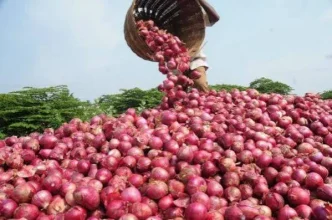
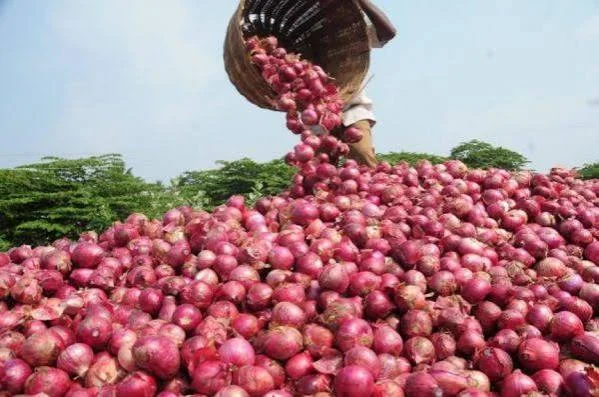
Five trucks transporting onions from Nigeria to Ghana have resumed commercial activities after the Economic Community of West African States (ECOWAS) stepped in to secure their release, ending a disruption that threatened regional trade and the livelihoods of exporters.
Key Highlights
- ECOWAS secured the release of five trucks carrying Nigerian onions that had been detained in Ghana, allowing them to resume commercial activities.
- The trucks were cleared to offload at Kotoku Market after intervention by ECOWAS and other stakeholders.
- The trucks had reportedly been blocked by a traders’ association, raising concerns over regional trade and the free movement of goods.
- ORO/WCA President Aliyu Maitasamu described the resolution as a major breakthrough that prevented significant financial losses for exporters.
- Ghana remains a major market for Nigerian onions, importing over 50 truckloads regularly, with Nigeria exporting an average of 16 trucks weekly.
The Regional Observatory of Onion in West and Central Africa (ORO/WCA) confirmed on Saturday, that the trucks, which had been detained at Kotoku Market in Ghana earlier in the week, were cleared to offload their cargoes on Friday following ECOWAS’ intervention.
President of ORO/WCA, Aliyu Maitasamu, described the development as a significant breakthrough, saying it spared traders from substantial financial losses while underscoring ECOWAS’ commitment to ensuring the free movement of goods within the region.
The trucks had reportedly been blocked from offloading by a traders’ association, sparking concerns that the incident could strain trade relations between Nigeria and Ghana despite existing regional trade agreements.
Maitasamu noted that Ghana remains a key export destination for Nigerian onions, receiving more than 50 truckloads regularly. Nigeria exports an average of 16 onion trucks to Ghana each week, while the Republic of Niger contributes about 10 truckloads under existing regional trade arrangements.
He commended the Federal Ministry of Industry, Trade and Investment, Ghana’s Ministry of Trade, Agribusiness and Industry, the Nigerian and Ghanaian High Commissions, the ECOWAS Trade Directorate and other stakeholders for their coordinated efforts in resolving the impasse.
Despite welcoming the release of the trucks, Maitasamu warned that the underlying causes of repeated disruptions in the regional onion trade remain unresolved.
Read also:
He called on the ECOWAS Commission to convene a high-level meeting involving the governments of Nigeria, Ghana and the Republic of Niger, alongside onion producers, traders and relevant stakeholders, to establish a sustainable framework for the movement and marketing of onions across West and Central Africa.
According to him, the proposed framework should align with the ECOWAS Trade Liberalisation Scheme (ETLS), the African Continental Free Trade Area (AfCFTA) and the Pan-African Payment and Settlement System (PAPSS).
He added that such a framework should include harmonised quality and phytosanitary standards, transparent market access rules, streamlined cross-border trading procedures, effective dispute resolution mechanisms and efficient regional payment systems.
Maitasamu stressed that a rules-based regional trade framework would reduce future disputes, strengthen regional economic integration, improve food security and boost the competitiveness of the onion value chain across West and Central Africa.
He reaffirmed ORO/WCA’s commitment to working closely with ECOWAS, member states and industry stakeholders to develop lasting solutions that promote seamless agricultural trade and prevent similar disruptions in the future.