

The Edo state government has projected its electricity sector reforms on the continental stage, presenting its decentralised power model at a high-level African Union (AU) energy meeting.
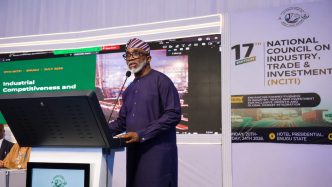
The Commissioner for Power, Hon. Paul Usenbo, who represented Governor Monday Okpebholo at the meeting, said the gesture is part of the administration’s efforts to attract investment, boost industrialisation and expand access to sustainable electricity.
Usenbo, who stated this in a statement made available to blueprint.ng, Sunday added that the AU energy engagement provided an opportunity to market Edo’s ongoing energy reforms to investors, development partners and policymakers across Africa.
He said the state’s electricity agenda is in line with the African Union’s Agenda 2063, the African Continental Free Trade Area (AfCFTA), the mission 300 initiative aimed at increasing electricity access across the continent, as well as the United Nations Sustainable Development Goal (SDG) 7 on affordable and clean energy.
Usenbo stated that participation at the continental forum would enable Edo state to deepen collaboration with multilateral institutions, attract development financing and establish strategic partnerships capable of accelerating electricity infrastructure development.
He attributed the state’s invitation to the event to “reforms introduced by the Okpebholo administration, including the implementation of the Edo State Electricity Law.
”It also includes progress on the proposed 100-megawatt Ologbo Independent Power Project, expansion of renewable energy programmes, rural electrification initiatives and policies designed to encourage private sector investment in the power sector.
”Good governance is about creating opportunities, and that begins with reliable electricity,” Usenbo said.
The commissioner further stated that discussions at the meeting focused on innovative financing mechanisms for energy projects, renewable energy deployment, strengthening intra-African trade under the AfCFTA, improving electricity access and supporting small and medium-scale enterprises through reliable power supply.