

A scorching heatwave is gripping southern Europe, with Spain and France battling wildfires as temperatures are set to climb as high as 44C in parts of Spain on Thursday
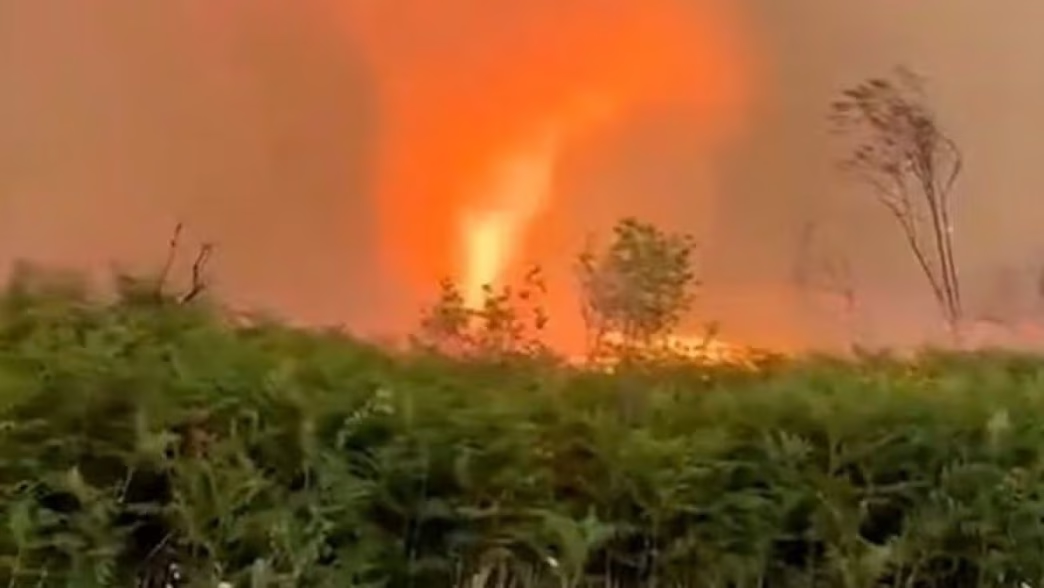
Southern Europe is in the grip of a scorching heatwave, with a rare ‘firenado’ tearing through a forest area in south-west France and Spain potentially facing record-breaking temperatures of 49C.
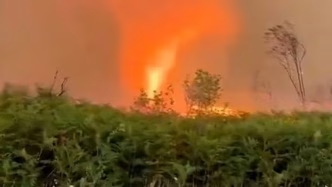
The extreme heat has fuelled wildfires in Spain, Italy and France in recent days. A ‘fire tornado’ – a rotating column of hot air that lifts flames and smoke – ripped through more than 2,000 hectares of woodland near Saumos, close to Lacanau in France’s Gironde department. The blaze forced the evacuation of more than 10,000 people overnight into Thursday.
Meanwhile, Spain’s national weather agency, AEMET, warned that the country’s third heatwave of the summer, which began on Tuesday, is expected to continue throughout the week, with temperatures forecast to reach 44C on Thursday.
The GFS weather model suggests areas around Seville could see temperatures as high as 49C on August 2. If that happens, Spain would surpass its highest recorded temperature of 47.6C, set in La Rambla, Córdoba province, in August 2021.
AEMET warned on Wednesday that the risk of wildfires was “very high or extreme” across most of mainland Spain and the Balearic Islands.
Firefighters in central Spain battled a blaze on Wednesday that has burned more than 32,000 hectares in one of the country’s largest wildfires on record. The fire, which broke out on July 16 near La Mierla in Guadalajara province, north-east of Madrid, forced the evacuation of several hundred people.
Spanish Prime Minister Pedro Sánchez visited the area on Wednesday and called for a pact between political parties to tackle the climate crisis. “Year after year we clearly see how climate change kills and destroys wealth in our communities,” he said in the village of Tamajón. “This isn’t politics. It is science, it’s about facts.”
In Italy, wildfires continued to burn on Wednesday in parts of the Casaboli forest, located in the Sicilian mountains between the towns of Monreale and Pioppo.
In France, the Gironde prefecture said around 500 firefighters had been deployed to tackle the blaze as “the situation remains unfavourable”.
More than 10,000 people were evacuated as a precaution, including tourists staying at eight holiday camps and campsites in the region. More than 1,000 residents living along the forest edge were also evacuated.
Nine municipalities opened reception and respite centres for evacuees, where more than 2,500 people took shelter, the prefecture said.
Interior Minister Laurent Nunez said more than 12,500 wildfires have broken out in France since the start of the year, burning almost 44,000 hectares.
Scientists have warned that human-driven climate change is increasing the frequency and intensity of heatwaves and droughts, creating conditions that make wildfires more likely and more destructive.
It comes after a Met Office report published in May found that there is an 86 per cent chance that at least one year between 2026 and 2030 will be hotter than 2024, currently the planet’s warmest year on record.
It also found that there is a 91 per cent chance that global temperatures will temporarily exceed 1.5C above pre-industrial levels in at least one of the next five years.
If global warming exceeds 1.5C – the target limit set by the Paris Agreement – the risk of severe climate impacts rises sharply.
These include ecosystem damage, species extinction, more extreme weather, food and water insecurity, heat-related deaths and the loss of ancient ice sheets in Greenland and Antarctica, which would cause sea levels to rise dramatically.