
For more than two decades, Plateau State, located in Nigeria’s Middle Belt, has remained one of Nigeria’s most troubled flashpoints, with recurring clashes, armed attacks, reprisals and criminal violence leaving thousands dead and many more displaced.
Communities across Bokkos, Barkin Ladi, Riyom, Mangu, Bassa and parts of Jos North and South have repeatedly witnessed bloodshed despite repeated military deployments, peace initiatives and government interventions aimed at restoring lasting stability.
The persistent insecurity has not only claimed lives but has also disrupted agriculture, commerce and education, while deepening mistrust among communities. Farmers have abandoned farmlands, businesses have suffered declining patronage, and many rural residents now live under constant fear of attacks.
Security experts have repeatedly warned that prolonged violence often evolves into more organised and brutal forms if perpetrators continue to operate with little fear of arrest or prosecution.
Fresh incidents recorded within the past week have heightened concerns that Plateau may now be witnessing an even more disturbing phase of violence. The discovery of two beheaded bodies within days of each other, coupled with the killing of two women in Jos South, has triggered fears that a new pattern of brutality is emerging—one capable of spreading fear far beyond the immediate victims and further destabilising communities already traumatised by years of conflict.
The gruesome incidents have unsettled residents across the state, with many describing them as unlike the conventional attacks that have characterised Plateau’s security crisis over the years. Beyond the loss of lives, the apparent mutilation of victims has raised serious questions about the motives of those behind the killings and whether criminal elements are deliberately employing terror tactics to intimidate communities.
The first incident occurred within the University of Jos community, where confusion erupted after the beheaded body of a middle-aged man was discovered on farmland inside the institution.
A 300-level student of the university who spoke on ground of anonymity said the body was discovered on a farm located within the university community.
“The body was found this morning on a farm around the university community. From what we gathered, the victim was neither a student nor a member of staff of the university.”
A senior university official, who also spoke on condition of anonymity because he was not authorised to speak to the media, confirmed the incident, saying preliminary findings suggested that the victim was a farmer who regularly cultivated crops on the farmland where his body was found.
“The victim is neither a student nor a staff member of the university. He is known to people around the area because he usually comes there to farm. We believe he came very early this morning, as he normally does.”
The official further disclosed that investigators believed the attack may have been premeditated.
“What actually happened is still unclear, but from the nature of the attack, it appears those responsible came specifically to kill him and made away with his head.”
According to the university official, the deceased’s relatives had been contacted, while arrangements were underway to evacuate the body. The source further disclosed that the university management had been briefed on the incident and would issue an official statement through its Information Directorate.
“The Information Directorate is handling the situation and will communicate appropriately through the university’s official platforms.”
Barely 48 hours after the discovery at the university, residents of Angwan Durun-Uwa community in Barkin Ladi Local Government Area were confronted with another horrifying scene after the decomposing body of a beheaded woman was found stuffed inside a sack and dumped at a refuse site.
Ibrahim Danjuma, a youth leader in Barkin Ladi who confirmed the incident on grind of anonymity said he received a distress call early Thursday morning informing him that a body had been abandoned at the refuse dump.
“I received a call at about 7 a.m. that a beheaded woman’s body had been dumped inside a sack at the refuse dump in Angwan Durun-Uwa. We immediately alerted the police, who responded to the scene.”
He explained that the body had already begun decomposing before it was discovered, making identification difficult.
The victim’s identity remained unknown as of the time of filing the report, while police commenced investigations to establish her identity and track down those responsible.
Before residents could recover from the shock of the two gruesome discoveries, suspected gunmen struck again in Gero community, Jos South Local Government Area, where two women were killed in the early hours of Monday behind the Jos South Local Government Secretariat.
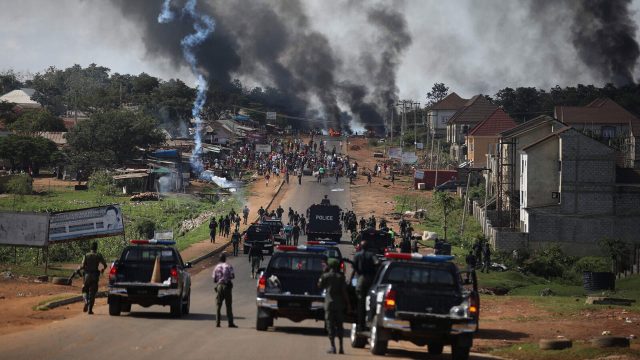
The killings immediately sparked outrage as women and youths carried the bodies of the victims to the local government secretariat in protest, demanding urgent government intervention. Protesters also blocked sections of the road leading to the secretariat, causing traffic disruption while insisting that authorities take decisive steps to halt the recurring killings.
Mary Chollom, one of the protesters, described the incident as another painful reminder of the worsening security situation confronting Plateau communities.
“We are tired of burying our loved ones. These women did nothing to deserve this. Government and security agencies must take decisive action to stop these senseless killings and ensure those responsible are brought to justice.”
She appealed to both the federal and Plateau State governments to strengthen security operations in vulnerable communities while urging security agencies to intensify surveillance and ensure that those responsible for the attacks are arrested and prosecuted.
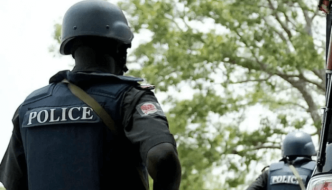
Security personnel were later deployed to the Jos South Local Government Secretariat and surrounding areas, while calm gradually returned after the protest.
A security expert who spoke to BusinessDay on ground of anonymity said “acts involving beheading and mutilation often go beyond homicide. Such methods are frequently intended to spread fear, discourage resistance, intimidate entire communities and create lasting psychological trauma.
“When such incidents become recurrent, they can erode public confidence in security institutions, fuel rumours, provoke reprisals and further complicate efforts to restore peace.
“The implications extend beyond security. Fear discourages farming activities, disrupts food production, weakens commercial activities and reduces investor confidence.
“Educational institutions may also face heightened concerns from parents and students whenever violence occurs around campuses, while tourism and hospitality businesses continue to suffer reputational damage;” he said.
“If the perpetrators are not swiftly identified and prosecuted, copycat attacks and further escalation cannot be ruled out. The emergence of increasingly brutal methods could embolden criminal groups and deepen insecurity across Plateau and neighbouring states;” he added.
Although the Plateau State Police Command had yet to officially comment on the incidents as of press time, and the Plateau State Government was yet to issue a specific statement on the latest beheading cases, the succession of killings has intensified public anxiety over what many now describe as a dangerous evolution in the state’s security crisis.
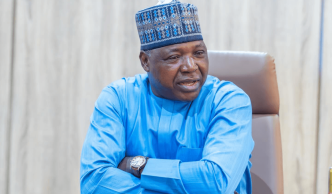
Governor Caleb Manasseh Mutfwang has, however, remained vocal over the recent wave of attacks across Plateau, repeatedly condemning the killings, visiting affected communities and directing security agencies to intensify efforts to protect vulnerable areas.
The governor has also continued to engage federal security authorities and community leaders in a bid to stem the violence, even as residents await an official reaction to the latest gruesome incidents involving the beheaded victims.
Addressing this disturbing trend requires more than routine security patrols. Authorities must strengthen intelligence gathering, deploy surveillance technology in vulnerable areas, improve collaboration between security agencies and local communities, and ensure rapid investigation and prosecution of offenders.
While the Plateau State Government has intensified engagements with security agencies and community stakeholders in response to the broader wave of killings, the latest beheading incidents require a targeted response, including swift investigations and public communication to reassure frightened residents.
Community policing, early warning systems, conflict-resolution mechanisms and sustained dialogue among stakeholders must complement security operations. Above all, government must demonstrate that no perpetrator is beyond the reach of the law. Only a coordinated response that combines justice, accountability, community engagement and sustained security presence can prevent this dangerous new pattern of violence from becoming entrenched in Plateau State.