

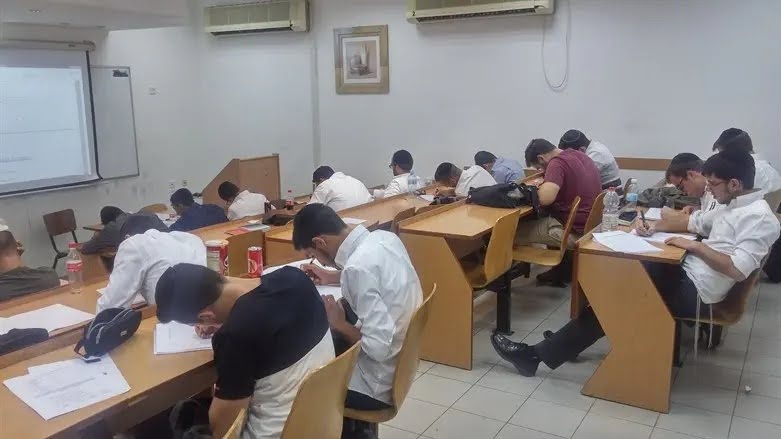
Israel’s High Court rejected the request of petitioners for a conditional order against the recently approved amendment to the Student Rights Law, which allows institutions of higher education to offer gender-separate academic programs at the graduate level.
In its decision, the High Court ruled that, at this stage, there is no basis for issuing either a conditional order or an interim injunction, and instructed the respondents to submit a preliminary response to the petition by September 17, 2026.
The practical effect of the decision is that the law remains in force without restriction, allowing academic institutions to submit applications to the Council for Higher Education to open separate study tracks.
The petition, filed by Prof. Yofi Tirosh and other petitioners, sought to require the state to explain why the amendment to the law—sponsored by Deputy Knesset Speaker MK Limor Son Har-Melech (Otzma Yehudit)—should not be repealed.
Following the ruling, Son Har-Melech welcomed the decision, saying, “One can understand the petitioners’ concern that making higher education more accessible will allow women and men who do not share their worldview to sit around decision-making tables in academia, the public sector, and other positions of influence. But that concern cannot justify denying thousands of Israelis the opportunity to obtain a higher education.”
Son Har-Melech also called on academic institutions not to delay implementation. “I call on all academic institutions not to wait, but to submit applications to the Council for Higher Education now to open separate academic tracks in accordance with the law. Thousands of women and men are waiting for this opportunity, and it’s time for the law to become a reality on the ground.”
The law reverses the situation created by an earlier High Court ruling that barred gender-separated graduate programs, returning the decision-making authority to the legislature and academic institutions.
The measure could have a significant impact on the Chareidi and religious communities. Chareidi women’s seminaries will be able to promote separate master’s degree programs, an option that had previously been unavailable because of restrictions on gender-separated graduate studies. Graduate degrees are often a prerequisite for career advancement, senior positions, and eligibility to compete for jobs in the civil service.
(YWN Israel Desk—Jerusalem)