
The Minister of State, Federal Ministry of Budget and Economic Planning, Dr. Doris Uzoka-Anite, has reiterated that through coordinated action, evidence-based interventions, and shared accountability, Nigeria has continued to achieve measurable progress geared towards building food systems that are inclusive, equitable, and capable of delivering better nutrition, better environment, and better livelihoods.
She made this known during the official opening of the dialogue on Nigeria’s convergence initiative workshop, themed ‘Bringing together stakeholders to advance the alignment between Food Systems Transformation and Climate Action, empowering national efforts to achieve the SDGs and Paris Climate Agreement Targets, held in Abuja recently.
The Minister informed participants that Nigeria is being positioned to access climate finance through green bonds, carbon markets, and sustainable finance instruments.
She further disclosed that the Renewed Hope Agenda places high value on food security, poverty reduction, and climate resilience; stressing that the Special Agro-Industrial Processing Zones, the Green Imperative Project, and the ongoing reforms in fertilizer and input delivery are all designed to increase productivity while reducing environmental degradation.
Dr. Uzoka-Anite therefore assured that the Federal Ministry of Budget and Economic Planning will continue to provide the coordinating platform and policy direction for the convergence and also ensure that the outcomes of this dialogue are reflected in the successor National Development Plan and in engagements with development partners on climate finance mechanisms.
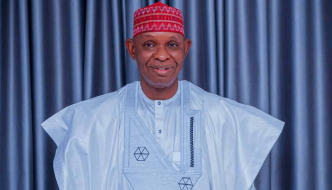
While delivering his remarks the Hon. Minister of State, Federal Ministry of Agriculture and Food Security, Sen. Aliyu Sabi Abdulahi, bemoaned the rising effect of climate change on our farmlands. He said climate change is one of the critical drivers of food insecurity in Nigeria and it affects disproportionately smallholder farmers, large farmers, and the likes, saying this is called the conversion between agri-food system transformation and climate action.
He revealed that his Ministry has come up with a programme called the National Farmer Soil Health Team and the National Soil Information System to guide the Nigerian farmer to know exactly the health status of their soil. According to him, the programme aims to achieve soil-specific or location-specific fertilizer recommendations and promote the National Oman Agriculture Program.
In his speech, the Hon. Minister, Federal Ministry of Innovation, Science and Technology, Dr. Kingsley Tochukwu Udeh, SAN assured that the Ministry is collaborating with other Ministries, State Governments, Development Partners, Civil Societies and Farmer Groups, in line with the fact that food system transformation is not the responsibility of one sector alone, he charged participants to convert knowledge into products, and products into nutrition and livelihoods for people.
The Minister who was represented by the Director General, Biotechnology Development Agency, Prof. Abdulahi Mustapha continued that if we prioritise commercialization, we ensure that science and technology deliver tangible benefits, from food security to livelihoods, and positions Nigeria as a leader in innovation-driven development. He therefore called on participants to commit to aligning food system with Nigeria’s Climate Action Goal, ensuring that science-driven innovation remains at the heart of our national development agenda.
Speaking earlier, the Permanent Secretary, Federal Ministry of Budget and Economic Planning, Dr. Deborah O.N. Odoh represented by the Director of Nutrition Dr. Clementina Okoro, called for stronger alignment between Nigeria’s food systems and climate action, describing climate-resilient agriculture as essential to achieving the country’s economic growth targets under the Renewed Hope Agenda, the Medium-Term National Development Plan (2026–2030), and Nigeria Agenda 2050. she stressed that transforming the agrifood sector through climate-smart policies, private sector investment, and coordinated action across all levels of government is critical to strengthening food security, reducing food inflation, creating jobs, and building a resilient economy, while urging stakeholders to focus on practical, scalable solutions that can be integrated into national planning and the 2026 budget cycle.
Also, the UN Resident Coordinator. Deputy Director United Nations Food Systems Coordinator Hub, Ms. Lara Blancho Rothe commended the Government of Nigeria, the UN System, and partners for advancing the integration of climate action and food systems transformation. It highlights Nigeria’s leadership through its ambitious climate commitments, Food Systems Transformation Pathway, and inclusive, country-led approach, noting that the country is the 22nd to join the Convergence Initiative.
She emphasized that tackling climate change and transforming food systems were inseparable for achieving sustainable development, resilience, and improved livelihoods, while reaffirming the UN’s commitment to supporting Nigeria through stronger policy coordination, stakeholder collaboration, and locally driven solutions that benefit women, youth, and communities across the country.
The Chairman of the House Committee on Nutrition and Food Security, Hon. Chike Okafor, called for urgent legislative action to align Nigeria’s food systems with climate change response, warning that climate change has become a major food security crisis threatening agricultural productivity, livelihoods, and national development.
He emphasized that the National Assembly must drive reforms through stronger laws, increased investment in climate-smart agriculture, rigorous oversight, and constituency-based interventions to build resilient food systems. He stressed that with 25 million Nigerians projected to face acute food insecurity in 2026, integrating food systems into Nigeria’s climate agenda is essential to achieving sustainable development, protecting farmers, and ensuring long-term food security.