
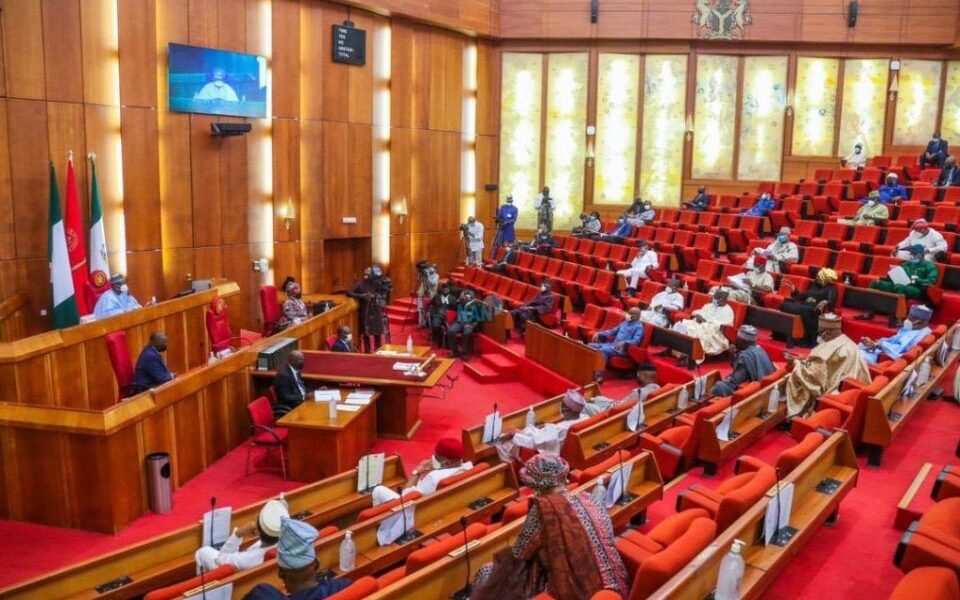
The Senate and the House of Representatives have begun efforts to reconcile differences in the versions of the State Police Bill passed by both chambers of the National Assembly.
A key area of disagreement is the composition of the National Police Council.
While the Senate retained the existing arrangement, the House of Representatives proposed significant changes aimed at strengthening the council’s independence.
Under the House version of the bill, both the President and state governors would no longer serve as chairman and members of the National Police Council.
Lawmakers argued that removing political office holders from the body would help safeguard its integrity and reduce the risk of undue influence.
Instead, the House proposed that the council’s chairman and members should be appointed by the President, with their appointments subject to confirmation by the National Assembly.
The harmonisation process is expected to produce a unified version of the State Police Bill before it is transmitted for further legislative action.
Given the differences between the House and Senate versions of the bill, the two chambers may constitute a conference committee to harmonise both versions before transmitting the bill to the state Houses of Assembly for concurrence.
In recommendations submitted by the House Committee on Constitution Review and considered at plenary, and sighted by our reporter, lawmakers argued that the council’s current composition “does not reflect true federalism,” being dominated by federal appointees with minimal state representation through governors alone.
“The President and governors being members of the council compromise the integrity of the council because the council is presumed to serve as one of the strongest oversight bodies over state police.
Governors and the President being members violate the principle of Nemo judex in causa sua [you cannot be the judge of your own case],” the committee said.
The House also faulted the proposed amendment for failing to capture several functions essential to effective oversight under a federal-state policing architecture.
While direct payment to the State Police Service Commission under Section 121(3c) was described as a positive independence safeguard, lawmakers said it does not extend funding guarantees to the state police service itself.
They said this could leave state police vulnerable to political manipulation through financial deprivation.
The House proposed a redraft directing that “any amount standing to the credit of a State Police Service established for a State shall be paid directly to the Service.”
Lawmakers further noted that Section 158, as drafted, grants independence only to the Federal Police Service Commission, leaving the National Police Council, which oversees both federal and state police, subject to executive control.