
Donald Trump has just shattered what little moral authority America had left on nuclear weapons.
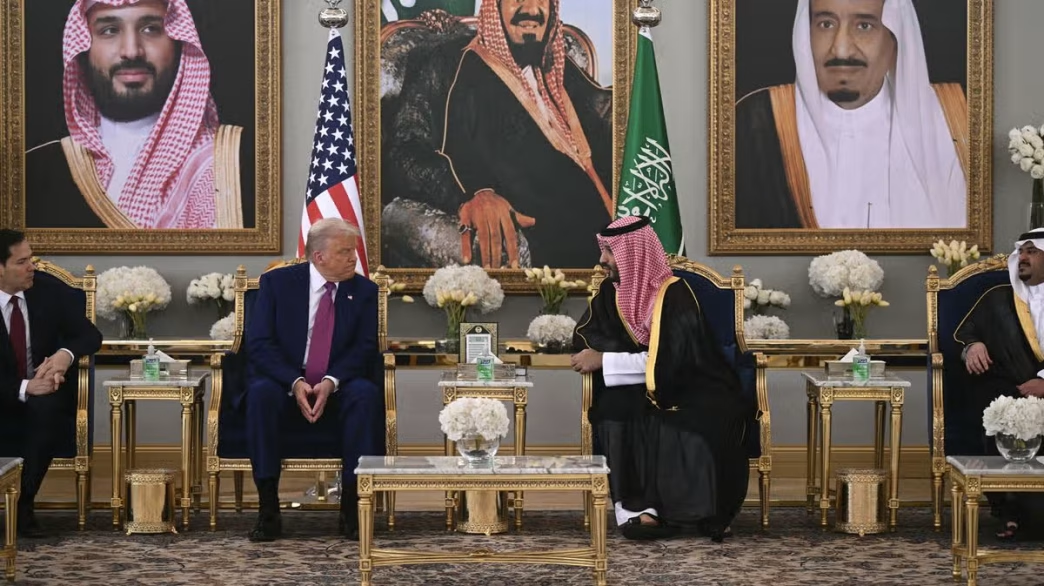
Washington has agreed a 30-year pact that could give Saudi Arabia access to the very technology Trump treats as an intolerable threat when Iran pursues it. America has gone to war, saying Tehran cannot be trusted with uranium enrichment, yet it is now offering a pathway towards it to a wealthy Gulf ally.
Apparently, uranium becomes less dangerous when it comes wrapped in money, flattery and the promise of lucrative business. Trump presents himself as the hardest man in any room, but in reality, he often looks like the easiest man in the world to buy. Praise him, roll out a red carpet, tell him he is a genius, and even the most serious questions of global security suddenly appear negotiable.
That is what makes this deal so alarming. Saudi Crown Prince Mohammed bin Salman has said his country would seek a nuclear weapon if Iran obtained one. A responsible president would therefore insist on the toughest inspections, the strongest safeguards and a firm ban on domestic enrichment.
Trump appears to have settled for something far easier: trust the Saudis, trust him and stop asking what may have been discussed behind closed doors.
At the very moment the Middle East is becoming more dangerous, Trump is weakening the safeguards designed to stop a nuclear arms race. Riyadh, meanwhile, appears to have understood the quickest route to his approval: praise, pageantry and profit.
The original offer of nuclear cooperation was supposed to come in return for Saudi Arabia establishing formal relations with Israel. The war in Gaza destroyed that prospect, yet Trump has handed Riyadh the nuclear prize anyway. Why? What did America receive in return? What was promised privately? And how long before Trump’s Tweedledee and Tweedledum sons, Don Jr or Eric, suddenly announce that uranium, reactor construction or Saudi infrastructure has always been a personal passion?
That question is not frivolous. It goes to the heart of the problem with Trump’s presidency.
His family has repeatedly invested in industries shaped by decisions made by his administration. His gormless sons have put money into businesses linked to defence, drones, cryptocurrency and critical minerals, sectors that can benefit from US government contracts, public backing or favourable policy.
Each time, the explanation is the same. They are private businessmen. They are passive investors. They played no role in the decisions. What astonishing luck they continue to enjoy. Most presidents go to great lengths to avoid even the appearance that they can be bought. Trump appears more concerned that people might think he came cheaply.
Congress must follow the money before this agreement goes any further. Which companies will build the reactors? Who owns them? Who invested before the agreement was signed? Which lobbyists met administration officials? Have Trump family businesses, funds, investors or partners held talks with Saudi figures or companies likely to benefit?
Have Don Jr or Eric acquired interests in businesses connected to nuclear energy, uranium, construction, technology or Saudi infrastructure? These questions exist because Trump has allowed conflicts of interest to become a permanent feature of his presidency. Public power and private profit now sit so closely together they may as well share a desk in the Oval Office.
Trump will inevitably dismiss scrutiny as a witch hunt. He prefers that phrase because “please show us the contracts” sounds rather less dramatic. Yet nuclear policy cannot be allowed to become another Trump family business opportunity whose true winners emerge only after the papers are signed and journalists begin searching company records.
The danger goes far beyond his family. A Saudi enrichment programme could encourage other regional powers to demand the same capability. Iran will argue that America’s nuclear rules depend entirely on whether a country is an enemy, an ally or a promising location for a Trump-branded development.
That charge will be difficult to dismiss. Trump boasts that he is the world’s greatest dealmaker. Increasingly, he resembles a man who will hand over the keys provided the buyer spends enough time admiring his ego.
A nuclear agreement cannot be treated like a casino licence, a hotel contract or another opportunity to put the family name above an entrance. If it goes wrong, the consequences cannot be covered with gold paint, dismissed as bad publicity or blamed on a former business partner.
Before Saudi Arabia enriches a single grain of uranium, Trump must reveal exactly what has been agreed, which businesses stand to gain and whether anyone connected to his family was anywhere near the negotiations. Because when the Trumps are involved, even nuclear non-proliferation risks becoming just another grift with gold lettering on the door.