
The Sustainability Professionals Institute of Nigeria (SPIN) has called for clearer boundaries in the Financial Reporting Council of Nigeria’s (FRC) role in sustainability regulation, urging the regulator to focus on overseeing corporate sustainability reporting rather than defining or regulating sustainability practice itself.
The institute said it fully supports Nigeria’s adoption of the International Sustainability Standards Board (ISSB) Sustainability Disclosure Standards (IFRS S1 and IFRS S2) and commended the country’s position as an early adopter. However, it expressed concern over what it described as a growing narrative that equates the two disclosure standards with the entirety of sustainability and places the discipline solely within the accounting profession.
According to SPIN, sustainability extends far beyond corporate reporting and includes governance, strategy, environmental stewardship, climate resilience, biodiversity, human rights, labour practices, stakeholder engagement, responsible investment, the circular economy, community development and long-term value creation. The institute argued that reporting standards merely provide a framework for communicating sustainability performance and should not be mistaken for the practice itself.
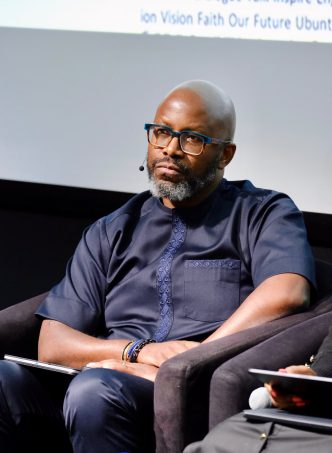
Ani Abimbola, vice president of SPIN, said organisations cannot credibly disclose sustainability performance without first embedding sound governance, measurement, management and continuous improvement processes.
“As Nigeria moves toward mandatory disclosure, our objective must be better sustainability performance, not merely better reports,” she said.
Abimbola noted that IFRS S1 and S2 form only part of a wider global sustainability ecosystem designed to guide sustainability-related financial disclosures for investors based on financial materiality and enterprise value. She said other internationally recognised frameworks, including the European Sustainability Reporting Standards, the Global Reporting Initiative, the UN Guiding Principles on Business and Human Rights, the OECD Guidelines for Multinational Enterprises and the UN Global Compact, remain essential for helping organisations understand and manage their environmental and social impacts.
The institute also warned against portraying sustainability as primarily an accounting function or suggesting that expertise in IFRS S1 and S2 alone amounts to competence in sustainability.
“Sustainability has always been multidisciplinary,” SPIN said. “It draws on environmental science, engineering, economics, finance, governance, law, public policy, climate science, community engagement, human rights, communications, social performance and risk management. No single profession can claim ownership of it.”
SPIN acknowledged that the FRC plays an important statutory role in regulating corporate reporting but argued that this responsibility should not extend to stewarding sustainability as an academic discipline, professional practice or national development agenda. It also cautioned that regulators should avoid crossing into implementation, commercial capacity building or direct competition with the professionals and institutions they oversee.
According to the institute, Nigeria’s sustainability ecosystem will only remain credible through collaboration among regulators, academia, professional institutes, businesses, civil society, development partners and practitioners from different disciplines. It warned that reducing sustainability education to a single investor-focused disclosure framework could weaken the institutional capacity needed to address climate change, biodiversity loss, social inequality and responsible business conduct.
SPIN reaffirmed its commitment to working with the Federal Government, regulators, the private sector and development partners to strengthen sustainability governance, professional competence and responsible business conduct through balanced, technically sound and internationally aligned approaches.
“Reports matter because they reflect reality; they do not replace it,” the institute said.